

 Image 1 of 1
Signed print# 2/2
Original print exists unsold with custom framing and novel markers.
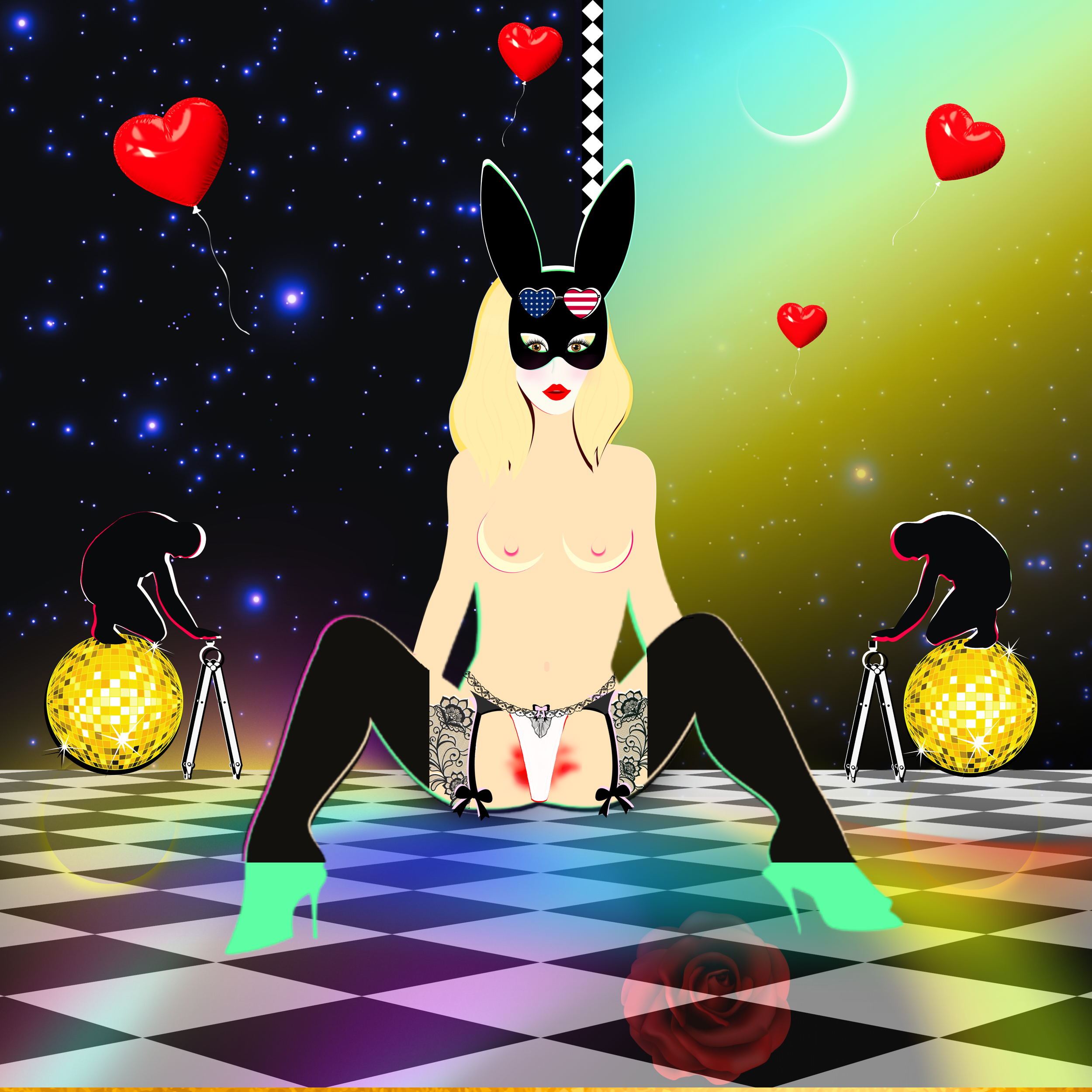
Blakes Newton references Newton and its warning of humanity’s departure from wholism into the narrowing confines of reductionist thought. The piece reflects a modern world increasingly tempted by mechanization and abstraction; a world drifting further from the sacred complexity of the human being.
The artist’s persistent use of menstrual blood symbolizes a confrontation with the undeniable realities of the body in an era that increasingly seeks to transcend, reconstruct, or redefine it. It stands as both reminder and protest; a gesture toward the organic truths modern culture often attempts to sterilize, commodify, or abstract away.
The female figure captures the shock of witnessing humanity transform before her eyes. Her expression and posture reflect the artist’s perception of a culture unraveling its relationship to sex, embodiment, and human identity itself. The pose is intentionally crude and confrontational, mirroring what the artist sees as the far greater violence occurring beneath the polished language of progress and technological advancement.
Signed print# 2/2
Original print exists unsold with custom framing and novel markers.
Blakes Newton references Newton and its warning of humanity’s departure from wholism into the narrowing confines of reductionist thought. The piece reflects a modern world increasingly tempted by mechanization and abstraction; a world drifting further from the sacred complexity of the human being.
The artist’s persistent use of menstrual blood symbolizes a confrontation with the undeniable realities of the body in an era that increasingly seeks to transcend, reconstruct, or redefine it. It stands as both reminder and protest; a gesture toward the organic truths modern culture often attempts to sterilize, commodify, or abstract away.
The female figure captures the shock of witnessing humanity transform before her eyes. Her expression and posture reflect the artist’s perception of a culture unraveling its relationship to sex, embodiment, and human identity itself. The pose is intentionally crude and confrontational, mirroring what the artist sees as the far greater violence occurring beneath the polished language of progress and technological advancement.